
RE
“Learning about faith, asking big questions and understanding others with kind hearts and open minds.”
Our Aims for Religious Education
At St Mary’s, our Christian ethos is at the heart of school life. Guided by our vision, “Kind Hearts. Open Mind. Stronger Together.”, Religious Education helps children explore faith, belief, values and the big questions of life.
We value our links with St Mary’s Church and the local community, working together to nurture children who are thoughtful, compassionate and respectful of others.
Our RE curriculum follows the Understanding Christianity syllabus, supported by NATRE (National Association of Teachers of Religious Education) for opportunities to explore a range of religious and non-religious world views.
At St Mary’s, RE aims to:
Develop religious literacy, giving children the knowledge, vocabulary and understanding to talk confidently and respectfully about Christianity, other religions and world views.
Encourage curiosity and enquiry, exploring big questions about meaning, purpose, identity, belonging, right and wrong, and what it means to live a good life.
Develop an open mind, enabling children to encounter different beliefs and perspectives, while reflecting on their own ideas and values.
Nurture kind hearts, developing empathy, compassion, respect and a willingness to challenge prejudice and misunderstanding.
Build a sense of belonging, helping children understand their place within their family, school, faith community and the wider world.
Encourage children to live out their values, considering how their choices and actions can make a positive difference to others.
Support spiritual development, providing opportunities to experience and reflect on awe, wonder, beauty and mystery.
Through RE, we seek to develop religiously literate, thoughtful and compassionate young people who can listen, question, reflect and live well alongside others — Kind Hearts. Open Mind. Stronger Together.
The St Mary's Big Frieze


Curriculum Overview
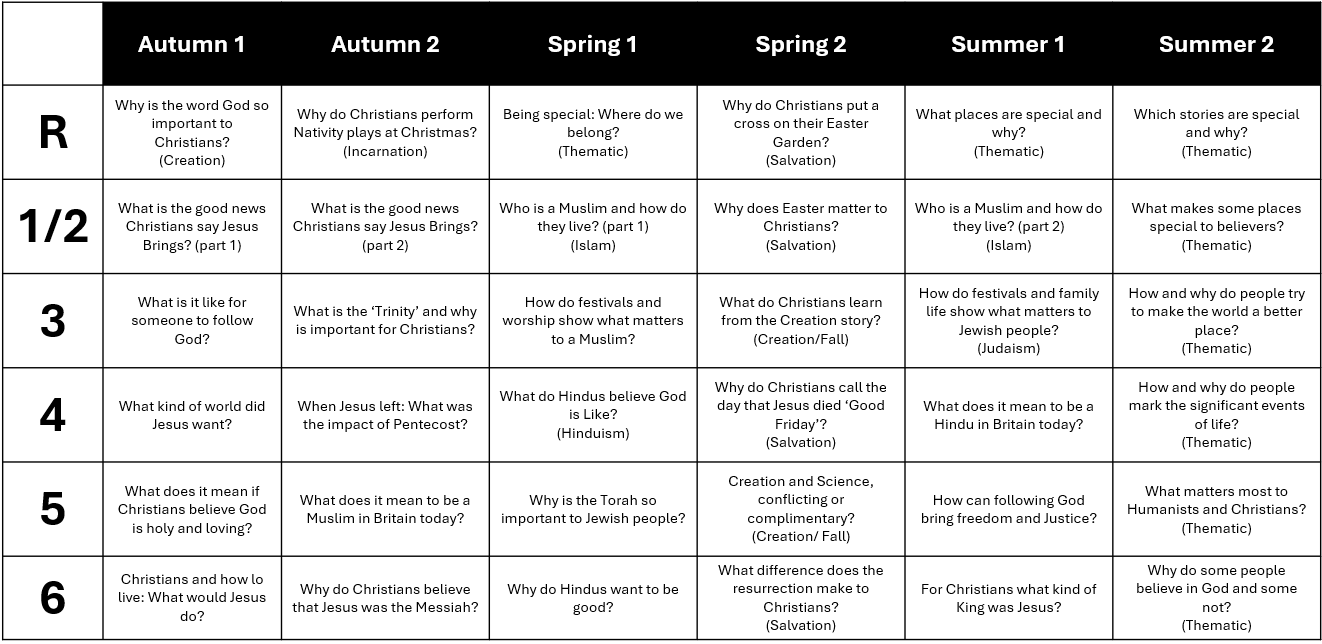
Progression of Skills
Disciplinary Knowledge in RE
At St Mary’s, we develop disciplinary knowledge in Religious Education by teaching pupils how to think and work like theologians, philosophers and social scientists. Through careful questioning, discussion and the analysis of religious texts, beliefs and practices, pupils learn to interpret evidence, consider different perspectives and construct well-reasoned arguments. We explicitly teach pupils how to use subject-specific vocabulary and apply disciplinary approaches to deepen their understanding of religion and develop their ability to reflect critically on faith and its impact on individuals and communities.
Theo the Theologian
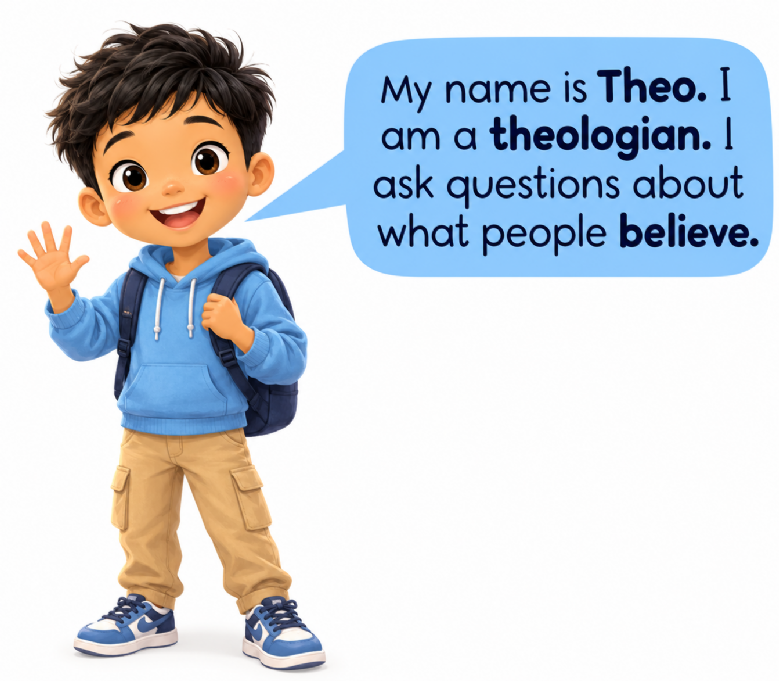
Theo is a theologian, and encourages children to use the disciplinary skill of theology. He is interested in what people believe, where those beliefs come from and how concepts connect with each other. He helps children to understand that not everyone will believe exactly the same things, even if they consider themselves to follow the same religion. He also helps children to interpret and understand sources of authority, such as religious texts and books, prayers, the Shahadah, different gospel stories, etc. Children are encouraged to recognise that people will interpret the same source of authority in a range of different ways.
Livvy the Sociologist
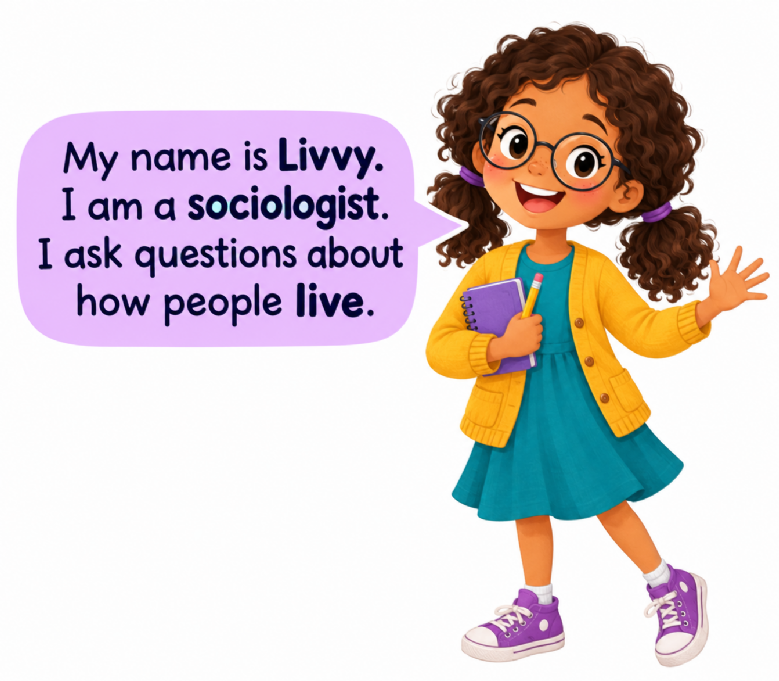
Livvy is a sociologist, and encourages children to use the disciplinary skill of sociology. She is interested in how people live, and how the things they believe might influence how they live. The children are encouraged to recognise that this will not be the same for everyone within one worldview, and they are asked to compare and contrast similarities and differences within one worldview. Livvy helps the children to analyse and compare contexts as well; what is appropriate for one worldview in one area might not be appropriate in another, and this influences the ways in which people live. This prevents the children from developing overly generalised and simplistic ideas about ‘all Christians’ or ‘all Muslims; instead allowing them to develop an idea of the richness and variety of different lived worldviews.
Sophie the Philosopher
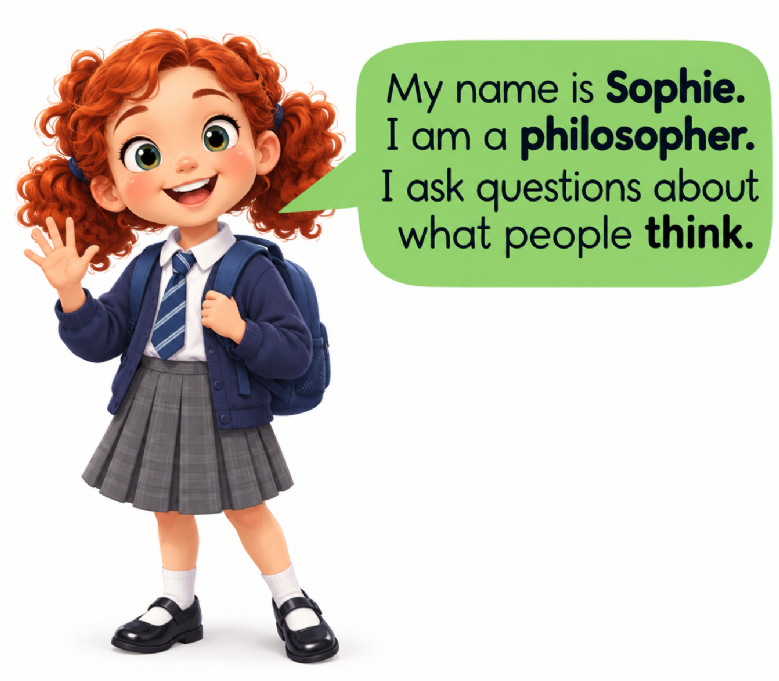
Sophie is a philosopher, and encourages the children to use the disciplinary skill of philosophy. She is interested in how people think and reason with the world, and why. She asks questions about what people know and how they know it. She allows children an opportunity to interrogate their own thoughts, values and opinions, developing critical thinking skills when asking ‘Why do I think that?’ thus linking to their own personal knowledge. For example, Sophie might ask the children to explore whether they think something is ‘good’ or moral, and then encourage them to unpick why they think that; is it their upbringing, a parent, their environment or a religious worldview that has shaped that opinion? The children can then apply these critical thinking skills when considering the opinions and thoughts of others, and of different worldviews, linking to our British Values of tolerance and mutual respect.